





Hire the best Qt developers in Latin America
















400k+
ENGINEERS
14 days
to hire
100+
COVERED
30-50%
US hires
Why hire Qt developers through Revelo?
Rigorously vetted senior developers from Latin America who work in your timezone, ready to contribute from day one.
Interview only the best Qt developers
A shortlist of three to five pre-vetted candidates, hand-picked by in-market recruiters. You decide who to interview, you decide who to hire.




One platform for talent, payroll, taxes and compliance
Your team runs legally across 18 countries in Latin America. Manage your engineers without managing the infrastructure underneath them.




Local recruiting experts invested in your hire
In-market recruiters and account managers cover sourcing, offer strategy, and onboarding. They stay with you until your engineer is up and running.


Your team, your terms
Month-to-month engagements mean you're never locked into headcount you don't need. Scale up for a big push, pull back after launch.





Hire the top 1% of developers in Latin America
Hire vetted senior developers, matched to your stack, your timezone, and your budget.


Hire Qt developers in 4 simple steps
Get from "we need someone" to your first day together in weeks, not months.
Tell us what you're building and what kind of Qt developers you need: skills, experience level, team dynamics.
Three to five matched, pre-vetted candidates: identity-checked, skills-tested, human-screened. No wading through hundreds of profiles.
Run your own technical interviews. You decide who to interview and who to hire. Full control, no gatekeeping.
Make the offer. Revelo handles payroll, benefits, taxes, and compliance so you can focus on building. Your engineer ships code from day one.
10+ years making it easier to hire elite nearshore Qt developers
Interview pre-vetted candidates who are fluent in English and work in your timezone.
Start hiring
Why hire developers based in Latin America?
Work synchronously with Qt developers in the same or overlapping US time zones. Real-time collaboration, no async tax.










What are Qt developers?
Why hire Qt developers?
What does it cost to hire Qt developers?
Why hire in Latin America?
How to evaluate Qt developers
Why expertise matters
Benefits of working with Qt developers
Qt developers are indispensable in developing versatile and efficient user interfaces and applications. With the growing need for applications that function seamlessly across various platforms, the demand for skilled Qt developers is rising. These developers are renowned for their ability to build robust applications that are adaptable and consistent across multiple operating systems—a crucial factor for businesses aiming to maintain a strong presence across diverse digital environments.
The Qt framework is celebrated for its ability to facilitate the development of both native and cross-platform applications, ensuring high performance and a user-friendly experience. This versatility is key to engaging a wider audience because it allows for the creation of applications that are both functional and aesthetically pleasing across different platforms. The implementation of Qt is instrumental for companies looking to enhance their digital infrastructure and establish a competitive edge in the market.
However, it’s often a challenge for companies who want to hire Qt developers, as the demand often surpasses the available talent pool. Companies must implement a meticulous hiring process to identify developers who are not only technically skilled in the Qt framework but also possess the creative and problem-solving abilities necessary to innovate and adapt in a rapidly evolving tech landscape.
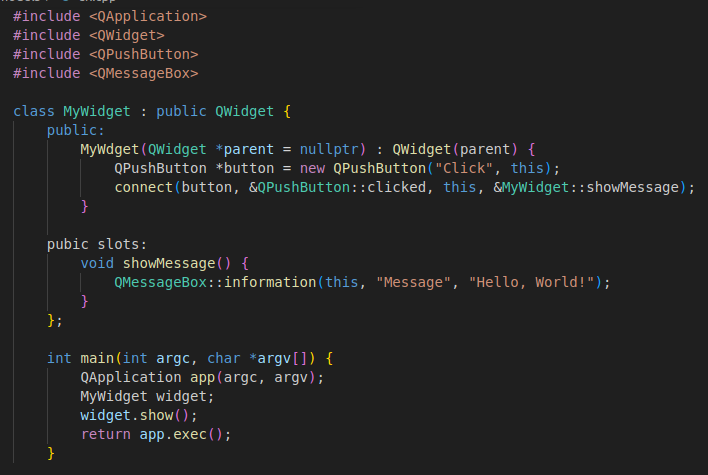
What Is Qt Development?
Qt development involves using Qt to create programs and graphical user interfaces (GUIs) for various platforms and embedded systems, including Android, iOS, macOS, and Integrity.
This cross-platform capability is a significant advantage for companies aiming to reach a broader audience without the need for multiple development streams. Qt allows for the creation of a single codebase that companies deploy across multiple platforms for consistency in user experience and reduction of development time and costs. Additionally, Qt's advanced graphical capabilities enable developers to create visually appealing and highly interactive user interfaces, which are crucial for engaging users and enhancing their experience.
Qt comes with a unique software development language called Qt Modeling Language (QML), widely used to create user interface-focused apps. Developers also bind Qt with other languages, including Java, Python, Go, Ring, Crystal, and Rust.
Qt development gives companies a distinct edge by enabling rapid development and deployment of high-performance applications. The framework's robust set of tools and libraries supports a wide range of functionalities, from 2D and 3D graphics to networking and database management, making it an ideal choice for a variety of industries, including automotive, healthcare, and consumer electronics.
Developers use Qt to create a wide range of mobile and desktop apps and GUIs, including:
- Web browsers
- Download tools, such as video downloaders and converters for Veoh, YouTube, and MyVideo
- Email clients
- Twitter clients
- News and RSS tools
- Music players
- Video editors
- Computer-aided design (CAD) software
- Text editors
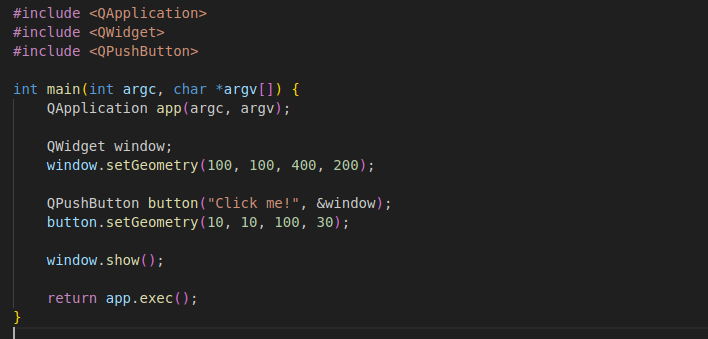
Why Qt Development?
Qt’s multi-platform capability is particularly valuable in today's diverse digital ecosystem, where businesses must cater to users on various devices and operating systems. In game development, Qt's advanced graphical capabilities and support for 2D- and 3D rendering make it an excellent choice for creating engaging, high-performance games that are deployed across desktop and mobile platforms. The consistency in user experience across these platforms, achieved through Qt, is vital for maintaining player engagement and satisfaction. Beyond game and general application development, developers use Qt in machine learning and AI. The framework’s ability to handle complex GUIs makes it ideal for developing sophisticated tools for data visualization and analysis in machine learning applications.
Companies use Qt to build intuitive interfaces for machine learning models, facilitating easier interaction and interpretation of complex data. This is particularly beneficial in sectors like healthcare, finance, and automotive, where data-driven decision-making is paramount. The integration of machine learning capabilities with Qt's robust framework allows businesses to develop innovative applications that process and visualize data in real time, providing them with a significant edge in data analysis and decision-making processes.
Qt's scalability and flexibility in application development also mean that businesses rapidly adapt to changing market demands. Whether it's updating existing applications or developing new solutions, Qt's framework supports agile development processes, enabling companies to efficiently evolve their software offerings and quickly capitalize on new opportunities.
Benefits of Qt Development
Qt’s adaptability in handling sophisticated algorithms and facilitating automation processes makes it an invaluable tool for businesses looking to innovate and optimize their operations. Companies that hire Qt developers unlock significant advantages, some of which include:
- Enhanced computer vision capabilities: Qt aids in developing applications that use computer vision algorithms for real-time image and video processing, which are crucial for sectors like security, automotive, and robotics.
- Robust desktop application development: Qt's comprehensive set of tools and libraries streamline the creation of high-performance desktop applications, ensuring a seamless user experience across various operating systems.
- Optimized algorithm implementation: The framework's efficiency in managing memory and processing power makes it ideal for implementing complex algorithms, particularly in data-intensive applications.
- Streamlined automation processes: Qt supports the development of applications that automate tasks, increasing efficiency and reducing the likelihood of human error, especially in manufacturing and industrial automation.
- Rapid development and deployment: Qt's tools and user-friendly interface allow for quicker development cycles, enabling businesses to respond swiftly to market changes or customer needs.
- Scalability and future-proofing: The framework's scalability ensures that applications grow with the business, easily incorporating new features or adapting to emerging technologies.
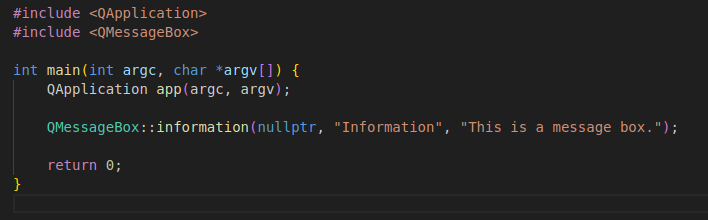
What Does a Qt Developer Do?
A Qt developer uses the Qt framework to create sophisticated, user-friendly applications that operate across multiple platforms. These experts translate complex project requirements into tangible, efficient software solutions. Their primary objective is to ensure that the end product meets user expectations for functionality, performance, and aesthetics. Achieving this requires a blend of coding skills and a keen understanding of user interface (UI) design and user experience (UX) principles.
Qt developer duties vary depending on the employer, industry, and experience level. Senior Qt developers usually have more responsibilities than their less experienced counterparts but most typically conduct the following duties:
- Collaborate with multidisciplinary teams to gather requirements and turn them into technical specifications
- Write maintainable, efficient, and clean code following best practices and coding standards
- Collaborate with UI and UX designers to ensure visually appealing and intuitive UIs
- Optimize GUI and software memory usage, performance, and responsiveness
- Provide constructive feedback to development team members
- Identify and fix software and GUI problems
- Work in your company's preferred development environment, such as Agile or Waterfall
- Stay up-to-date with advancements and trends in Qt technologies
Required Skills and Qualifications
Top candidates for Qt development positions should possess a blend of technical proficiencies, soft skills, and relevant educational qualifications to excel in this role. A deep understanding of the Qt framework is fundamental. This includes expertise in C++, the primary language used in Qt, as well as a strong grasp of Qt Creator, the integrated development environment (IDE) for Qt.
Proficiency in JavaScript is also valuable, particularly for developers working with QML for user interface design. Developers should be familiar with various operating systems, notably Linux and Windows, for cross-platform development. In cases where applications are targeted for mobile platforms, knowledge of iOS and Swift becomes essential.
In terms of database management, experience with SQL is advantageous, as it enables the handling of data-driven aspects of applications. For those working in environments that use Visual Studio, proficiency with this IDE from Microsoft enhances productivity and streamline development processes.
While specific educational requirements vary, most positions require a bachelor’s degree in computer science, software engineering, or a related field. Certifications in Qt, C++, or relevant technologies bolster a candidate's profile, though practical experience often holds more weight in this field.
Beyond hard skills, top Qt developers should exhibit strong problem-solving abilities, critical thinking, and a keen attention to detail. Effective communication skills are paramount, as developers frequently collaborate with cross-functional teams, including UI/UX designers and project managers. Adaptability to changing industry trends is another key soft skill. Other desirable soft skills include teamwork ability, time-management and project-management skills, and a commitment to professional development.
For developers to meet project deadlines and deliver high-quality work, they should possess the ability to work either independently or as part of a team, coupled with strong organizational and time-management skills. In a field where continuous learning is the norm, a candidate's commitment to personal and professional development often sets them apart.
Popular Qt-Related Languages and Libraries
In Qt/C++ development, C++ is the primary language due to its integral role in the framework and extensive support for features and libraries. Python, with bindings like PyQt and PySide, offers versatility in application range, while JavaScript, used alongside QML, is necessary for dynamic UI/UX design. Key libraries in Qt include Qt Multimedia for handling diverse multimedia content, Qt Network for efficient network programming, and Qt SQL for integrating database functionalities.
Related Languages
The choice of programming language plays a pivotal role in the efficiency and effectiveness of the Qt development process. Three popular languages that stand out in their integration and utility with the Qt framework include:
- C++: This is the primary language used for Qt development. Qt itself is written in C++, and it provides extensive support for C++ features and libraries. This makes it the go-to choice for most Qt developers.
- Python: Thanks to bindings like PyQt and PySide, Python is a popular choice for Qt development, especially for developers who prefer Python's syntax and capabilities. These bindings allow developers to access Qt's functionalities using Python, making it a versatile choice for a range of applications.
- JavaScript: In the context of Qt, JavaScript is primarily used with QML (Qt Modeling Language) for designing dynamic user interfaces. QML syntax is declarative and uses JavaScript for scripting, so JavaScript is a valuable language for Qt developers focused on UI/UX design.
Related Libraries
In Qt’s robust ecosystem, several libraries stand out for their specialized functionalities. They are integral for developers looking to enhance their applications with multimedia features, network connectivity, or database interactions. Key among these libraries are:
- Qt Multimedia: This library is designed to handle various multimedia content within the Qt framework. It supports audio, video, radio, and camera functionalities, making it invaluable for applications that require multimedia capabilities, such as media players, video editors, or apps that integrate audio and video streaming.
- Qt Network: This library provides a set of APIs for network programming that allows developers to write portable applications. It includes classes for TCP/IP and UDP sockets, as well as higher-level client/server classes for managing network communications more efficiently.
- Qt SQL: Qt SQL is a library that provides support for integrating database functionalities in Qt applications. It includes classes for database programming, enabling connections to various SQL databases, executing SQL queries, and handling result sets.
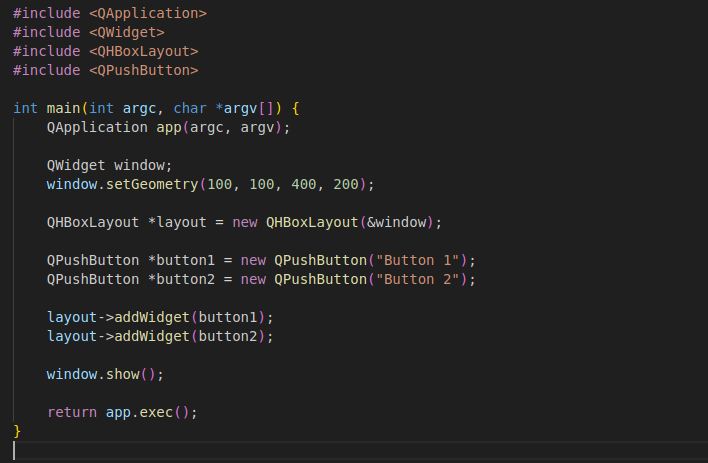
Popular Qt Programming Tools
For a Qt developer, the right tools often simplify coding, debugging, and UI design for a more efficient development cycle. From IDEs that offer an all-in-one workspace to specialized utilities for memory management and debugging, each tool plays a unique role in the development process. These tools not only aid in writing and optimizing code but also provide critical support in diagnosing and resolving issues.
Key tools in a Qt developer's arsenal include:
- Qt Creator: An IDE specifically designed for Qt development. It provides a comprehensive suite of tools for coding, debugging, and designing user interfaces, all within a single platform. Qt Creator simplifies the development process, offering features like code completion, version control integration, and an interface that’s intuitive for novice and experienced developers alike.
- Valgrind: A tool for memory debugging, memory leak detection, and profiling. For Qt engineers, particularly those working with complex applications, Valgrind helps ensure the efficiency and stability of the software by identifying memory-related errors, which are often critical in optimizing application performance and resource management.
- GDB (GNU Debugger): A powerful debugger commonly used in Qt development, especially when working with C++ code. It allows engineers to perform detailed debugging, including setting breakpoints, stepping through code, and inspecting variables. This level of control is vital for diagnosing and fixing bugs effectively.

How Does Qt Fit Into Modern Development?
Qt is a versatile framework that is used for both front-end and back-end development, as well as for creating standalone applications. Its capabilities encompass:
- Front-end development: Qt is widely used for building user interfaces. It provides tools and libraries for designing and developing both native and cross-platform GUIs. This includes desktop applications, as well as interfaces for embedded systems and mobile devices.
- Back-end development: While Qt is more commonly associated with front-end development, it also offers functionalities useful for back-end development. This includes support for networking, database management, and file handling, which are essential for the server-side logic and data management aspects of an application.
- Application development: One of Qt's primary uses is in full-fledged app development, where it supports both the front-end (UI) and back-end (logic and data handling) components. Qt is well-known for its cross-platform capabilities, allowing developers to write code once and deploy it across various platforms like Windows, macOS, Linux, and mobile operating systems.
Therefore, Qt's scope goes beyond traditional front-end or back-end categorizations, making it a comprehensive tool for building complete applications.
How Much Does It Cost To Hire a Qt Developer?
In the US, mid-level Qt developers with four to six years of experience typically earn $95,000 to $155,000 annually. Salaries may vary based on location, experience, and certifications, and often include further compensation such as bonuses, stock options, or equity shares. A Qt full-stack developer would command a higher salary than a Qt developer who’s primarily front or back-end.
Meanwhile, Latin American developers possess similar skills but usually receive 30% to 50% lower compensation due to the lower cost of living. Revelo offers access to a pool of highly vetted Latin American tech talent, providing cost-effective hiring solutions while maintaining high quality.
Featured Tool: Tech Team Budget Calculator
Finding Qt Developers for Your Project
To find the best Qt candidates, focus on assessing their experience in Qt development, their ability to work within your specific industry, and their proficiency in related technologies like web development, TypeScript, Node.js, and AWS if necessary. Engaging with Qt developer communities, conferences, and platforms also help hiring teams to identify top talent.
Look for programmers who have a track record of successfully delivering Qt projects and collaborating effectively with multidisciplinary teams. Consider their adaptability to your company's development environment and methodologies, such as Agile or Waterfall. Don't forget to evaluate their problem-solving skills and willingness to stay updated with the latest advancements in Qt and related technologies.
Why Hire Qt Developers With Revelo?
Qt developers are crucial for startups and established businesses aiming to create powerful, cross-platform applications. Their ability to optimize user interfaces and deliver responsive software is a game-changer.
Revelo simplifies sourcing and hiring Qt developers with a rigorous vetting process and comprehensive HR support to help you quickly find top talent. We help with payroll, benefits, taxes, and compliance, providing a risk-free solution.
Hire Qt developers with Revelo to enhance your team's capabilities.
Frequently asked questions
Everything you need to know about hiring Qt developers through Revelo.
How much does it cost to hire Qt developers through Revelo?
All-in monthly costs run roughly $4,600–$5,600 for junior, $5,800–$7,500 for mid-level, and $7,200–$10,700 for senior developers: engineer compensation, PEO coverage, and Revelo's margin combined. No placement fee, no surprise invoices.
How quickly can I hire Qt developers through Revelo?
You'll see a curated shortlist of matched, pre-vetted candidates within 72 hours, and most companies make a hire within 14 days of sharing their requirements.
What is Revelo's vetting process for Qt developers?
Every candidate is identity-checked, skills-tested, and human-screened: technical assessments matched to their stack, soft-skills and English-fluency interviews, and review by in-market recruiting experts before they ever reach your shortlist.
What engagement models does Revelo offer for Qt developers?
Month-to-month, full-time engagements, with no long-term lock-in. Scale up for a big push or pull back after launch as your roadmap evolves, with a 14-day risk-free trial on every hire.
What happens after I hire Qt developers through Revelo?
Revelo handles payroll, benefits, taxes, and compliance across 18 countries, and your dedicated account manager stays with you through onboarding and beyond. Your engineer ships code from day one.
Our Qt developers know these tech stacks and more
Our talent is experienced in these libraries, APIs, platforms, frameworks, and databases.
Ready to hire Qt developers?
See a curated shortlist of pre-vetted candidates in 72 hours. Only pay if you hire.