


There aren't enough of the jobs people want. That, not bots, is what's breaking hiring.
Recruiting Leader @ Zapier | "It's Not Bots Versus Bots." What's Actually Breaking Hiring
Every hiring process at Zapier now includes an AI fluency assessment. Candidates are encouraged to use AI in technical work. And a human still reviews every single application that moves forward.

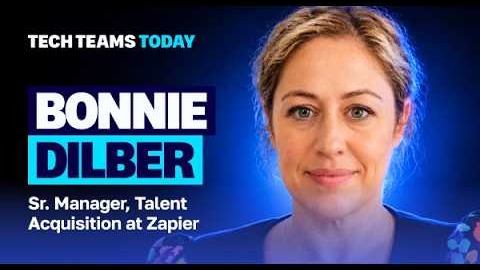
With
Bonnie Dilber
Sr. Manager, Talent Acquisition
Zapier

Listen everywhere
I don't feel like it's bots versus bots. I work at one of the most AI-forward companies on the planet, and humans still review every application that moves forward.
—
Bonnie Dilber
Sr. Manager, Talent Acquisition
Zapier
About this episode
Every hiring process at Zapier now includes an AI fluency assessment. Candidates are encouraged to use AI in technical work. And a human still reviews every application that moves forward.
Bonnie Dilber runs recruiting at one of the most AI-forward companies operating today. Josh sat down with her to work through what has changed in hiring, and what has not.
The answers are messier than the headlines. Deepfaked candidates show up in remote interviews. Automated application tools trip the same fraud alerts as real scammers. Teams get leaner at the top and thinner at the bottom, with career ladders that no longer describe how growth works. Underneath all of it sits a supply problem that no amount of tooling fixes.
Bonnie also gets specific about the things a VP controls directly: what separates hiring managers who get great outcomes from ones who throw a job description over the wall, how to test for comfort with ambiguity when it is not on a resume, how to break a split panel decision, and what to say to an interviewer who gets overruled and takes it personally.
Auto-generated transcript. Lightly cleaned; may contain errors.
00:00 Yeah, we've definitely run into people who are using a filter to present themselves as someone else. I think right now like AI fluency, like enthusiasm around that is sort of a non-negotiable. I think that the core issue that we don't talk enough about is there just aren't enough of the jobs that people want. Welcome to Tech Teams Today, where we talk with the people building and leading the engineering orgs behind today's most innovative companies. Our guest today is Bonnie Dilber, senior manager of talent acquisition at Zapier. During our chat, we learn how AI is transforming Zapier and their hiring approaches. Bonnie shares some details on how to make great hires in 2026 and what a great hire actually looks like for a company centered on AI fluency. Onto the episode. Welcome to the podcast. Very excited to have you, Bonnie. I'm going to jump right in. And one of the things that I want to learn from you is AI is disrupting everything. And I know on the talent acquisition side, there's a ton of disruption there with resumes that come in and how you handle all of those, but I know there's a ton more that I don't know because they don't live in it every day. So, operationally speaking, how has AI altered the way you and your teams work? Yeah. Um I guess there's two sides of it. It's like what's happening on on the candidate side and on like what's coming in and then also our own kind of systems like internally, that sort of thing. Um in terms of on the candidate side, we're currently getting a lot of AI either generated or AI supported applications. And so there is a really large number of people using things like these automated appliers that you know will have AI generated resumes, AI generated you know content in response to application questions. Um so you know that's that's one batch of things. So figuring out is this a real person that's using automation and AI? Is this a fraudulent candidate? Because that's like a real issue you know. So there's that piece going on. Um, and then there's also, you know, on our side, how we're bringing AI into our tools and systems, both to sort of cut through that application volume and help us like figure out where the real people are and and that sort of thing, and then how you can use it to make your processes like more efficient, allow recruiter work to evolve so that we're able to focus more on the strategic human side of things. Um, so I think both of those things are going on right now and I can go into more detail if helpful, but uh
02:36 yeah, the the uh the term of AI supported was interesting because it feels like that's the good kind as opposed to AI is doing all the work, but AI supported feels like
02:48 yeah, I'm using it to help me be more me or do a better job of how I'm doing. Does that kind of align with what you were thinking? Yeah, I think I think people should be, you know, using AI to help them, whether it's to identify jobs that are a good fit to get honest feedback around whether, you know, an opportunity is going to be the right match um or what might be missing in their application so that they can then think through, you know, oh, I didn't talk about this entire section. Just I'll share a personal example. When I used an AI tool, I was comparing my resume to a job and there was a whole section on sourcing and it pointed out that I had nothing about sourcing anywhere in my resume, which is like really recruiter 101. I don't know why it wasn't in my resume, but it really like illuminated a bright spot or a not a bright spot, a blind blind spot in my resume that then I'm like, great, I actually have this experience. let me update my resume and add that in there versus oh this is a whole I don't have that experience but I'm going to put it in there so that I can check all the boxes like which is sort of you know going I would say a bridge too far. Um so yeah I think that there are great ways that people can and should be using AI. Um I think you start to get into a gray area with some of these sort of like AI generated application tools and the ones that are filling out applications for people for a couple of reasons. One, they sometimes just fabricate things. Two, they actually trigger a lot of the same fraud alerts that fraudulent applications trigger. And so our systems are left trying to figure out, is this a real person using a tool or is this a scammer? And I think a lot of companies are honestly not going to take the time to figure out which of those it is. They're just going to click reject on all of them. So I think that people just put themselves in like a risky spot when they start doing that. but also the quality of what's produced is generally not the best um in my experience.
04:42 Has the interview process had to change? I was talking with somebody in your space and they told the story of we had to ask the person to show their hands so we knew because that was a common tell back in the day. Um
04:57 yeah. Have Have you gone through that? Is it
05:01 we're on the other side or it's still kind of messy? What does that look like? Yeah, we've definitely run into people who are using a filter to present themselves as someone else. We've also run into different people showing up at different stages and being a remote company. That's the sort of thing that actually you could miss. You go fully hire someone and if the same person has never, you know, met with them or they ensure the same person shows up for each person, then you might never catch it. The only reason we did is we record every interview. We use a tool called Bright Hire that rec that sits on every interview, transcribes and records. And that was actually how the recruiter caught it. The hiring manager noted something was a little bit off and then the recruiter went back and watched and was like, "That's not who I talked to." And we go and compare the videos and realize it's different people. We've also had the opposite where the same person has shown up for with multiple applications. So, same, you know, and I think this is again one of those scams where they're just trying to kind of get into US companies and so they submit lots and lots of applications and then have, you know, someone they send for interviews hoping that they'll get through. Um, goodness.
06:07 So, yeah. And again, having it recorded helped us go back and be like, wait, that's the same person.
06:14 Yeah. Uh, so Zapier, you're is it 100% remote or do you have people in that no office.
06:22 Okay. Gotcha. Gotcha. Okay. Yeah. Because I've heard stories about companies that do have an office that are experimenting with like bringing back putting people back in front of the whiteboard because you can't fake that. Like let's bring them in, get them in front of whiteboard. And AI can't really help you.
06:41 AI help is bad, but also there's a malicious uh thing that you're trying to filter out.
06:47 Yeah. And you know we want people using AI so we allow them to use AI allow and encourage them to use it in our technical like our skills assessments technical assessments things like that I think the big thing for us is transparency and then also that they are driving the strategy that they are accountable to the results that they're able to interact with it so it's not like AI did something and then they say here you go but they're actually like I'm going to adjust this for these reasons or I actually disagree with this here's how I'm going to, you know, tweak tweak my prompt or give it feedback so that I get a better, you know, outcome, that sort of thing. And so people who are using AI effectively are still behind the, you know, wheel driving the the end result. Um, but a lot of people, I think, have sort of like handed that over and now they're just kind of a passenger. Um, allowing AI to, you know, be the star. And I just, if a company wanted that, then they can, they don't need a person to do that. So yeah. Yeah, exactly. So
07:49 I I am a AI opt I'm an optimist in general. So um I I I believe we're going to come out on the other side and AI is eventually going to make the hiring process better, but there's points where I've looked at it and it feels like if it's gotten harder. it was already a difficult thing to do well and
08:10 the current state that we were in or maybe a couple months ago and hopefully it's gotten better is that gosh it feels like it's harder to hire because it's like bots fighting bots and you're trying to figure out what's actually real. Yeah.
08:22 Where where do you see it currently?
08:25 Um you know it's interesting. It's it is harder to hire. Um I don't feel like it's bots versus bots. I work at one of the most like AI forward companies probably on the planet who has we have like all the top tools and still humans are reviewing every application that moves forward there. There's certainly AI tools like in the process that help us sort of like search more effectively for you know certain criteria like natural language search of applications um which I think personally benefits candidates because you don't need this perfect keyword matching the way that you did like a decade ago when when it was just a recruiter searching for a keyword. Now AI can actually say great like if you're looking for um why am I stumbling for demand gen experience you know I can also look for performance marketing I can all you know all of that kind of means the same thing versus the old way of it's only going to pull up the people who have exactly demand gen on their resume that sort of thing so I think AI is actually a benefit to candidates on that front and to recruiters but anyway I don't feel like it's bots versus bots inherently because on the hiring side ultimately in most cases a human is sort of doing that like review and the decision making. I think that the core issue that we don't talk enough about is there just aren't enough of the jobs that people want and so everyone's you've got a ton of people competing for a very small number of jobs. There's also a huge side of the market where they are desperate to hire and they can't um because they don't pay enough because of the locations they're in like those sorts of things. So, I think there's some like real misalignment and that's really the issue and why people are frustrated and they feel like, you know, they're going for thousands of, you know, applying to thousands of jobs, nothing's breaking through because there just aren't a lot, you know, they're applying alongside thousands of other people for each of those roles and one person's going to get hired. And tech as an industry has negative job creation. Remote jobs are, you know, over half of applications are submitted for remote jobs. Well, the vast majority of jobs are not remote and so it's just uh there's more of that like kind of pipeline supply and demand problem than anything else, I think.
10:40 Well, one thing you said in there just puts a smile on my face. The fact that it's not a magical checklist of very specific words that have to trigger for the ATS to say, "You should look at this person." like that was always one of the frustrating things that bothered me both as a hiring manager and as someone trying to find a job. I just felt like you had to know the perfect word. So I think that's a wonderful use to to help people find the right people that maybe are using a slightly different term or yeah, you know, just like you had mentioned there was a whole gap in hey there's this thing I'm not talking about because you probably took it for granted of like of course I do this but then you realize oh wait I didn't tell people I do this but I know I do this.
11:20 Um so So okay so I want to pivot to what um teams look like and everybody's running appropriately so towards AI native teams across the for forget what part of the company that's where everybody's going. Yeah.
11:37 Uh so when you're thinking about that from the TA side what does that look like? I've like I've heard stories of people that are we we are rewriting the job descriptions that have looked this way for like a decade because now we need the people to do fundamentally different things. So are you having to work through that and the hiring managers they having to rethink what that looks like?
11:59 Yeah, I think we're absolutely having to sort of evolve what's in the job descriptions and more more importantly how you're assessing people throughout the process. Um, so every single hiring process at my company has an AI fluency assessment of some sort, whether it's a candidate having to present something, having to build something live, um, doing, you know, an online like coding assessment that they have to use AI to do that sort of thing. Um, and it also raises the bar on the output because the expectation is not like you use AI to produce a less good or even equally good output in the same time. It's like, hey, you plus AI given three hours should be able to do a lot more than you alone were able to do in three hours or AI alone could do in three hours. So, um, you got to actually get it to a better place. So, I think the bar has really raised. um risen uh is higher and as a result um and yeah so I think um I think those are those are the big things we're looking for and then also even defining like what do we mean I think everyone throws around AI fluency but like what do we mean by that
13:12 um and I think that term means something very different in different settings right now there's not like a shared definition um so like at my company we're looking for I AI fluency maybe has a definition, but like what that bar is like we're looking for people that are building workflows and that can point to how those workflows are actually either changing the way that their work is structured, changing how they spend their time, are being deployed across teams, that sort of thing. Um, and it's hard to find that. Not a lot of not a lot of people are using AI in that way right now. Yeah, it's a it's an interesting time to be alive and in in the technology sector, you know, because everything is changing. One of the things that we see a lot of talk about, but there's no definitive answer. I think it's because there is no real answer, but reshaping what a team looks like. Do you see that happening within your company where maybe team sizes are getting smaller or reshaping roles? What's happening there? Yeah, I think smaller teams with more higher level roles, fewer entry-level roles, which I think is is a real problem. Like we're creating a huge issue long term for our workforce. But setting that aside, I think a lot of companies are moving towards leaner teams of higher level, more senior people that are using a blend of people and AI. Um, and uh, I also there's been like kind of conversation around this and I I definitely kind of see this coming of more fewer full-time employees, more sort of like specialists that might cycle in and out like contractors, uh, consultants, like people who bring deep expertise in an area and can come and help like solve a problem and then go out because you don't necessarily need as many sort of full-time people because someone can come in bring that great we built a couple of agents and they like get that to the finish line. I also I haven't necessarily seen this yet, but I think it's like conversation that I find interesting of how do you start rewarding people who are able to get more done because of how they're using AI because maybe you know you're now saving like you've got someone who used to lead a team of 10. They're able to bring that down to a team of six because of all of the ways that they're using AI to and they're actually doing more work with six people than they did with 10. But if they're most of the time growth is tied to like you know how big your team is and layers and all that you don't get that. So suddenly you know you don't want to penalize someone for actually you know being able to like build things and increase efficiency. And so I think there's going to be some interesting like shifts or conversations around how to reward that. Yeah, that's going to challenge a lot of things that have been kind of like table stakes for a long time around career ladders or whatever label you want to use for that. For sure.
16:08 Again, I think it's also going to make it more challenging because there's I mean, especially in tech, again, negative job creation, not a lot of room for growth, not a lot of room for movement. And so you have to find other ways to reward your top talent or else you know someone else will come snap them up or you know we'll start seeing people make more frequent moves because they're not like seeing that growth and those rewards. So I think there's a lot of things that will have to evolve um to kind of meet the moment.
16:38 Yeah. And it's ch it's changing so fast uh that it is a a challenge to keep up with. Okay. One of the things that is a pet peeve of mine is hiring managers that don't really partner with talent acquisition. I've I've really invested in whatever group is helping me find whoever I need. Really investing time with them. But I but I see a lot of people that just like throw a job description over the wall and then they expect something magical to come out on the other side. and and I don't know how that ever actually works. Um, but some people expect it to. So, what what I'd like to learn from you as someone that's been in the TA space for as long as you have is what do the best hiring managers do that everybody else doesn't?
17:29 Yeah. Um, yeah, that's a great question. I think a lot of it is like the first thing you said of like true partnership. Like I think they're co-defining the role, co-owning like what the process is going to look like. um they're helping bring people to the table. They're giving regular feedback so that the recruiter and the hiring manager are on the same page about the profile. And they're also doing that across the team because you may have seen this. I have certainly experienced this where you think that everything's aligned and then you you know get someone in front of the executive and the executive's like what is this? Like this isn't what I was looking for at all. um and suddenly like you know the candidate's rejected at the end of the process that sort of thing because the team didn't get everyone kind of lined up or you'll have two people sitting the same interview one's like strong yes one's strong no I've literally seen that spread it's because they each had a very different idea of what they needed in this role and nobody really got them got everyone on the same page so I think recruiting can definitely drive a lot of that like alignment but I think a good hiring manager is going to also take ownership for making sure everyone's on the same page about, you know, the the person they're trying to bring it onto the team. Um, and they're going to be giving feedback after interviews and things like that.
18:50 So, it really is the traditional, hey, let's like be prepared for this. Let's make sure everybody's on the same page. Like everything that we've been taught for a long time that that that still works. It hasn't changed. Uh,
19:03 yeah, I think so. I think this is a cool use case for AI though because you know I mentioned we use this like Bright Hire tool that transcribes everything and um I've like thrown some of those transcriptions before like when we do see some of those like really different uh things and you'll say like great why did these two people or who's off and like I can actually be one of those like objective filters or kind of objective like sources to be like that there's evidence to support this assessment and here's some holes or questions here. Now, of course, a recruiter can do that since you've got this interview recorded and you've got, you know, transcriptions and things like that. So, a recruiter can do that, too, but I think AI can do it a lot more quickly.
19:48 Um, and just sort of say like, here's some questions or things that you need to dig into or, you know, that sort of thing and kind of help spot misalignment in a group. Um, since one of the great use cases for AI is pattern recognition. Yeah. One of the things that uh speaking of patterns, I've I've seen good hiring managers do is when they find somebody, they move fast because they know they're good and somebody else thinks they're good likely or, you know, there's other smart people that are trying to hire. Has the need to move fast increased in the age of AI or has it been about the same?
20:28 Um, I think we should. Yeah, I think people should be moving faster on top talent. Um I think the opposite is often happening. I think more more candidates, more options, more information means more like kind of decision or analysis paralysis. Is that what they say? Uh people struggle to actually make a decision. Um and so but yeah, I also think people are losing lots of great candidates when they do that. So
21:00 yeah, and so I think if we go back to what you said at the start of this topic around getting everybody aligned and if you really have that clarity and if you're really working as a team to define what good looks like, then you should get to the spot where you look around the table like
21:15 this person is the right person. Let's go. Um, and so yeah, I think that up that upfront investment really to your point because the volume is up, it's even more important than it was because everything there's so many good people out there right now that you do have to be a bit more crisp, it feels like. Yeah. Yeah.
21:36 Okay. So, let's go to the other side of the table and talk about the candidates that are slam dunks and what is it that makes them fit the need and is it the same stuff that's always been true or is there new things that now the best candidates have that others don't?
21:56 Yeah, you know, I think it always does depend on of course like the company and the job. my version of best candidate uh could be very different than than yours depending on our company needs and that sort of thing. But I think right now at least from my purview and kind of the space I'm in. Um I think right now like AI fluency like enthusiasm around that is sort of a non-negotiable. I just think the best candidates are are using it. They're not waiting for permission or direction or someone to teach them or a work requirement. They're just like diving in. um into it. Um I think the best candidates are really comfortable with ambiguity and change and moving quickly. Um, I think AI has accel I mean accelerated that like the pace of development has gotten so rapid that if you're not comfortable with changing what you're doing and or with something that was working three weeks ago breaking because one company changed like you know something or suddenly their prices shot up and now you're like gosh we got to like replace this with you know something. If you're not comfortable with that that kind of stuff and was saying like cool this is part of the learning cycle. I'm motivated to figure this out. um then you're going to be like miserable in the space and so I think that that's definitely something like companies are looking for. Um I think just sort of this like willingness to dive in and kind of figure stuff out and take ownership for for doing things versus waiting. I also think every company is talking about more productivity uh higher expectations like you know any any tech company right now is like talk you know do le do more with less like that whole thing. And so I think people need to be able to demonstrate that they kind of align with that mentality to to succeed in processes right now. Like if you come in and your solution is like I just got got to hire another person to do that and you know that kind of thing like that's probably not going to fly right now.
23:55 Yeah. One of the um defining factors of the talent acquisition folks that I loved working with was I could throw those amoeba like definitions of what I need to hire of somebody that learns fast and is comfortable with ambiguity. Those aren't check boxes that you can see on a resume. So, do you have any tips or tricks for how you and your team are are figuring out whether somebody really does fit that or not?
24:26 Yeah. Um, well, one of the things I said, we both kind of said it at the same time, like it's not on our resume. To some extent it is because I do think where someone's worked and what was happening at that company at that time can be helpful. So, for example, um you know, if they were at some big tech, Snowflake, a HubSpot or something pre-IPO, um that could be really relevant to a company that's in like that building phase versus being at that company post IPO or got bigger, got more, you know, like maybe not as relevant for a startup. And so, I do think sometimes looking at their resume and have they been drawn in the past to this sort of environment and have they thrived in that environment? Like, did they go in that environment? they got promoted three times and they stuck it out for four years. That's a good signal they're actually going to work well in this in our ambiguous uh situation. On the flip side, was it a six-month blip and then they've been at like big legacy company, big legacy? Probably not. You know, just haven't they might even claim that they're great with ambiguity and they handle it well, but they probably haven't seen it at a level that is going to mimic what's happening in in sort of like a startup space right now. So, I do think you can get some insight or things to dig into from a resume. But that aside, I think it's talking to them. I think it's saying like, "Tell me, you know, the behavioral. Tell me a time that you've been in a situation where things totally changed." Or you worked on something for six months and your CEO came in and said like, "This is crap. Like, we're going to totally adjust or we're closing down this product line or whatever it might be. Like, what did you do? Um, how did you respond? Like, what happened?" you know, just like have them kind of walk through and listen for, you know, what was their attitude and orientation in those moments? Um, is that a point of frustration or a point where they were like energized? Um, when you ask them, tell me about a time you had an obstacle, do they talk about the time that something changed unexpectedly and how that was really deflating and, you know, they just kind of had to like tough it out or, you know, was it like things were really stagnant and that was frustrating to them? That's a good signal of the stuff you know what and on the flip side like what are some of your bright spots your most exciting like proudest moments at work and are they highlighting times that they've kind of gotten through a big obstacle and that sort of thing um or navigated a big change successfully like just I think a lot of the stories that people tell and can give you some insight into what energizes them what uh you know where they shine and what is really frustrating to them. Um, I also think just being direct with them like, "Hey, a concern I have right now is like you've only been at these really big companies where you're really well resourced." I'm honestly like unclear or not confident that you'll fit in this environment where we're much more resource constrained. So, like talk to me about that. How are you thinking about that? And then kind of listen for are they like drawing that out? Are they saying like, "Yeah, I've been thinking a lot about that. That's an experience that I'm looking for." Um because I think it's going to push me to have to like rely more on AI and building and that's really exciting to me. Um or is it like oh I haven't really thought about that you know or you know I I I can figure out anything is this really generic you know so I think yeah I think those are some of the conversations people should be having. Yeah, I I I love seeing what gets that person to get fired up and they like lean forward and they start talking faster and they're excited and doing all those things. Like those are those are my favorite moments because you really do learn, oh, this is this is the thing that fires this person up. This is what they're passionate about.
28:07 And seeing that and hopefully it connects with what you're looking for. And when it does, that is magical. But I think those are great great questions in just trying to trying to figure that out because
28:17 that is the hard part of of trying to find that good because there's a lot of talented people but you are really looking for that really good match in a whole bunch of different directions. Um okay so last question. It's tough when you're hiring team is um large and getting everybody on the same page. You talked about the importance of doing that upfront. How do you help a team where there's those opposing views? Right. You talked about AI can help and objectively sort that out, but but that's always a challenge where there's somebody passionate. I think we should hire them and somebody passionate like I don't think we should. That's always a difficult thing for hiring managers to like understand how to navigate. So, can you help our viewers and listeners just work through that thing that's always going to come up?
29:06 Yeah, absolutely. and definitely been in that situation quite a bit. And I think some of it is like being clear on where the decision lies and what the priorities are and then like really being evidence-based. I think it's so easy for like biases to creep into these, you know, spaces. Um, and so making sure that you're kind of going off of like what is it that we really want and need in this role and is everyone on the same page about that? And then we're like evaluating as objectively as possible. Um, and then kind of focusing on like we're going to get the information from everyone. Hiring manager gets to make the decision and then you can kind of advise them to like think through that. Um, and I think uh, yeah, I mean I really think it's a lot of that and like making sure that you sort of like bring down the temperature and have an objective conversation around like what the what the strengths and concerns are for each candidate and for those concerns like are they Yeah. like I guess what's kind of like the risk risk or cost benefit. I think the other thing recruiting can do is push for like you know often if to me if a hiring manager is really like hesitant or lacks confidence in the hire it's it should probably be a no and you're sort of debating because it's it's not clear and there's probably someone better out there. Um I think sometimes you pressure test like uh our CEO will do this. He'll like say, "Oh, I have like real questions. I'm not confident in this offer." And sometimes it's not necessarily that he's a no on it, but it's that he wants like are you going to fight for this person? Can you actually make a case for this candidate? Um, and if the answer is no or you're not willing to, it's probably a good sign. It's just not the right person. Because when you have someone and it is the right person for your team, you are going to like go to bat for them. You're going to like be able to explain that. And if you abandon them really quickly, it's probably not the right right hire. I love that uh for a couple of different reasons. One of one of my um favorite things to do in a hiring process is when I know someone's right, I ask a question like that, like are you sure?
31:19 Um because it I'm not sure that's right. And what I'm looking for is somebody that in a high pressure moment like that where the hiring manager is like, I think you're wrong. That that they take a step back and think and are willing to say, actually, I think I'm right. And here's why. And I'm looking for that again to have that same fight because I do want them to to own things and you want somebody that's passionate that you can hand this and know like yeah, they're going to take it and run with it. Um,
31:45 one of the things that has been an interesting challenge for me in trying to grow the hiring team. I would love to hear your your thoughts is bringing people into the hiring process and sometimes they get overruled on we're actually going to hire this person or we're not going to hire this person because of X Y and Z and making sure they understand that it's a learning process and not like you're wrong, you know, you got it wrong, but like helping them navigate that of and understand, okay, I'm learning how to get good at hiring because hiring is a skill and it takes practice. So, I try and inject people early into the process, but but but there's times where they come in like, I don't think we should hire that person, but we did. Like, why don't they listen to me?
32:29 How do you help people navigate that when they're early into that process?
32:34 Yeah, that's a great um a great point because we've definitely had that especially if someone feels really strongly about it. Um, I think one of them is reminding people that they only have one. The only person that really has the full picture in most hiring processes is going to be like the recruiter, the hiring manager, and the executive. They can usually see everything. Most places I've worked, everyone else can't see all of the interview notes. They can't see all of the other conversations that I've had that have happened. Um, and so I think part of it is reminding people like you're seeing one slice and no one's going to be perfect. You're never going to hire someone that checks every single box and is or rarely are you going to, you know, hire them. Um, someone that's like absolutely perfect. So, there's going to be a drawback to everyone. Maybe this is the one. And we decided after looking across everything that that was like the best the the lowest risk like area of growth. Um, I think there's also what you do with the information because we always like if someone's a no and they have an area they're concerned about, our next step isn't like, well, let me tell you why it's like not actually that big of a deal. It's like, great, let's go get more information that will either confirm or, you know, mitigate this risk. That's part of what our executive interview, which is the last interview at Zapier, like for any process is with an executive. And that person's job is actually to dig into like confirm the strengths and sort of like dig into any areas of growth references. I mean people have like really there's a lot of negative thoughts on references but we're we take them pretty seriously. Um we like to talk to managers and colleagues and that's where part of where you can sort of validate like you know hey we're not like talk to me about the most technical project they did if you're concerned about someone's technical skills for example. um you can certainly give them another assessment. You can also like have someone walk you through like how how did they do in that area? Is this something that like held them back? You know, that kind of thing. And so, um I think then going back to that person and being able to say, you know, you raised like a valid concern. here's the steps that we took as a result and what we found that gives us confidence. Or you raised a valid concern and we, you know, dug into it and we're like, "Oh yeah, that that was a bigger concern than we realized." You know, or it might be like, "Let me actually share with you why I think that like your concern was overblown." And what I sometimes see is people have like too high of an expectation for a more junior role. So maybe, you know, you're sort of doing a peer interview. They're at a manager level. you're interviewing a specialist, they're trying to hold the specialist to their, you know, they're thinking like, I could do better than that. Well, you should. Your manager, they're specialists, like, you know, that kind of thing. And so, I think being able to sort of help them understand um the decision or like calibrate that kind of thing.
35:30 Yeah. Yeah. No, that's all good stuff because because it is um it's hard when you're new to it and like figure it out and find your way, get your feet up and under you. So, I think that's fantastic, the support that you give to the team member as they're learning. Okay, Bonnie, you did it. Uh, last thing before we go. Uh, let's say people already knew about you and your company and they would love to work with you. What's the best way for them to find open roles or to reach out to you?
36:00 Yeah. Um, so for open roles of Zapier, uh, if you look up Zapier, uh, Zapier jobs, it's like probably the first website. I believe is the first website that'll pop up. So, um I would definitely say visit our jobs page. We post every opening. So, um uh you can also follow both the company or me on all all the different social media platforms. Um I will regularly share different roles that we're hiring for that sort of thing. Um so, yeah.
36:30 Perfect. All right, Bonnie, thanks so much for joining us.
36:32 Yeah, thanks so much for having me. That was Bonnie Dilber, senior manager of talent acquisition at Zapier. I know there's at least one person in your network that can learn from this episode. Go ahead, share it with them. They'll appreciate it, and I know I will. Our show, Tech Teams Today, is brought to you by Revelo. If you're looking to build out your engineering team with world-class, vetted talent from Latin America that's time zone aligned and ready to ship, check us out at revelo.com. I'm Josh Anderson. Thanks for tuning in and we'll see you next episode.
Chapters
- 00:00 Intro
- 00:52 How AI changed the candidate side and the recruiter side
- 04:42 Deepfakes and duplicate candidates in remote interviews
- 06:19 Letting candidates use AI, with transparency
- 07:55 "It's not bots versus bots": the real supply problem
- 11:01 Rewriting job descriptions and assessing AI fluency
- 14:12 Leaner teams, fewer entry-level roles, and rewarding efficiency
- 16:40 What the best hiring managers do
- 20:27 Moving fast on top talent
- 21:20 What a slam-dunk candidate looks like now
- 23:34 Testing for comfort with ambiguity
- 28:10 Breaking a split panel decision
- 31:16 Helping interviewers who get overruled
- 35:55 Where to find Zapier's open roles
Topics
- Why AI-generated applications trip the same fraud alerts as scammers
- Deepfaked candidates, and why Zapier records every interview
- What "AI fluency" means at Zapier, and how every hiring process tests for it
- Leaner teams, fewer entry-level roles, and career ladders that no longer fit
- What the best hiring managers do that others skip
- How to test for comfort with ambiguity when it is not on the resume
- Breaking a split panel decision without letting bias in
- Coaching an interviewer who gets overruled
More from the show
Keep listening
Be our next guest
Leading an engineering team? Come tell us what you've learned.
Tech Teams Today is an editorial platform from Revelo.